
DEXTER at IAC 2026
Most DEXTER project partners took part in the 77th International Astronautical Congress (IAC 2026), held in Antalya, Türkiye, from 5–9 October. DEXTER contributed two talks, one poster and participated in two special sessions covering in-space recycling, recoverable spacecraft materials and active debris removal.
The first year of DEXTER has focused mainly on studies of what materials are already available in orbit, how they could be recovered and how they could be reused. Some of the first results were presented at IAC 2026.
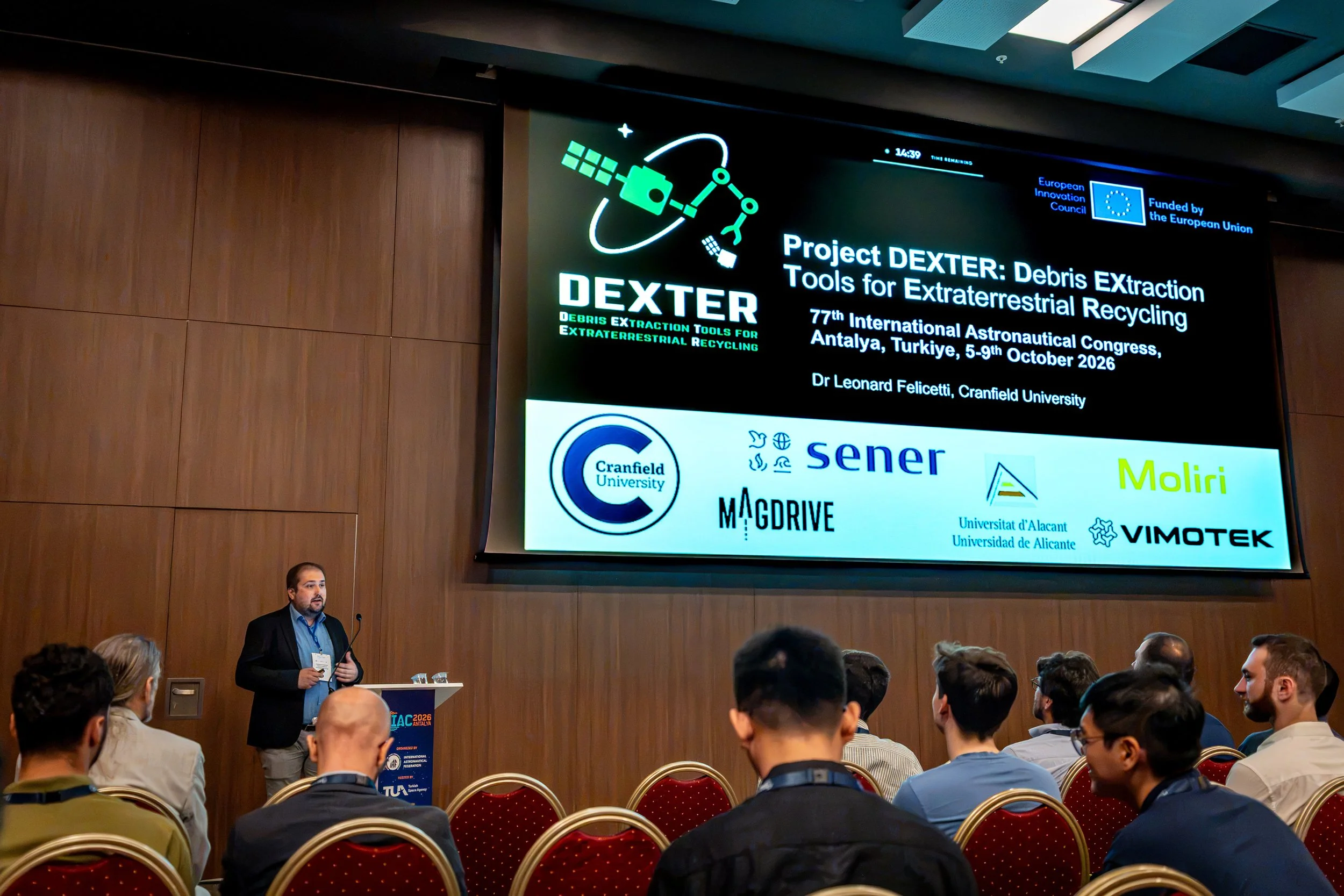
Leonard Felicetti (Cranfield University) presenting the DEXTER project at IAC 2026.
Introducing Project DEXTER
Dr. Leonard Felicetti from Cranfield University presented the main DEXTER paper on 9 October, introducing the project's objectives, planned technologies and progress from the first year.
DEXTER is developing modular robotic tools for spacecraft disassembly and material extraction. The project will also test ways of using recovered metal for new structures and as propellant for spacecraft propulsion.
Paper: Project DEXTER: Debris EXtraction Tools for Extraterrestrial Recycling (IAC abstract)
First results on recoverable material in orbit
Two further contributions from Cranfield University presented results from the first-year studies.
Santiago García De La Peña presented “Quantitative Mapping of Recoverable Material Resources for In-Orbit Recycling in LEO and MEO”. The study estimates the material resources that could potentially be recovered from spacecraft and other objects in low and medium Earth orbit.
Paper: Download from Zenodo (IAC abstract)
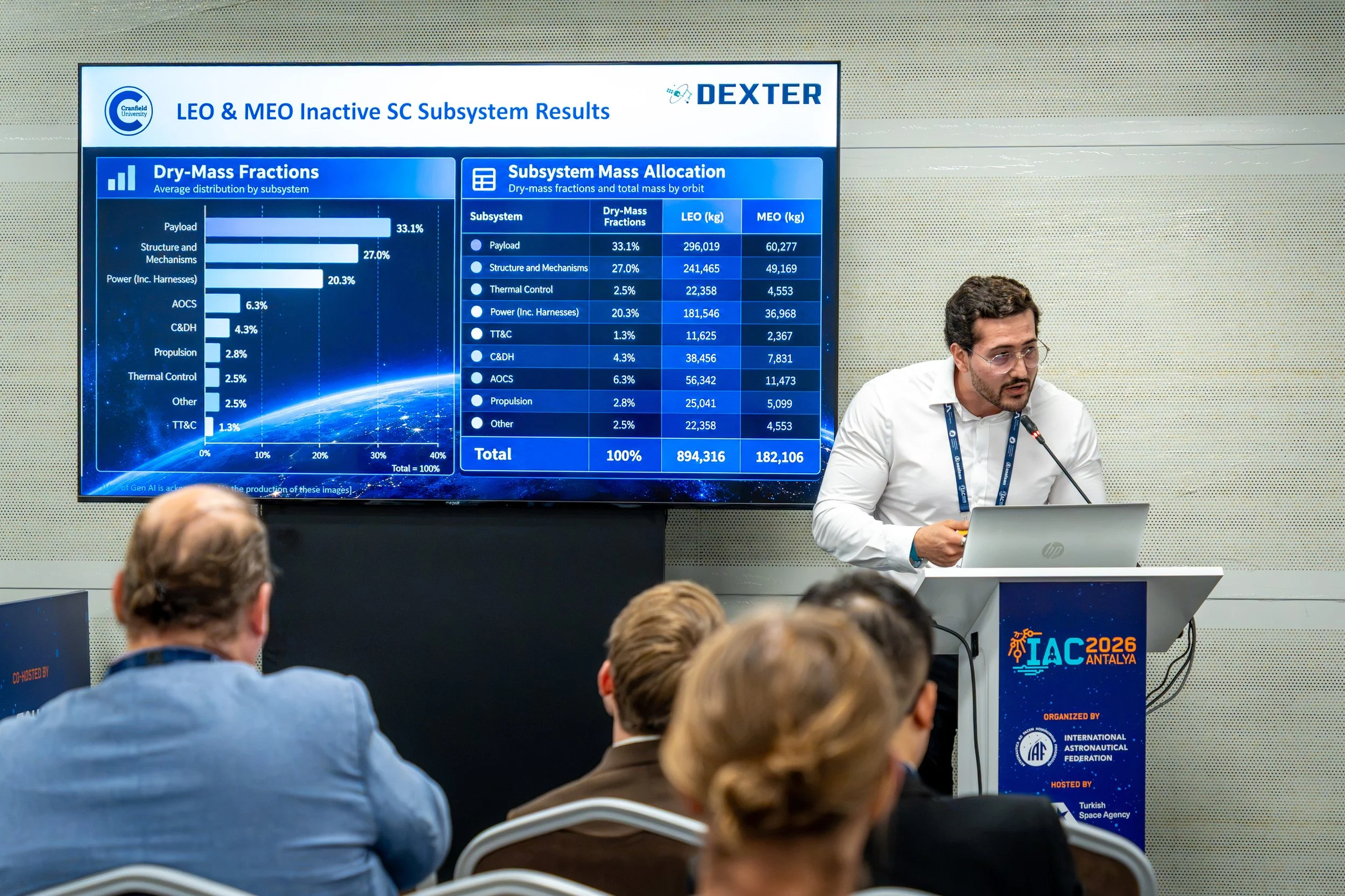
Santiago García De La Peña presenting the first results on recoverable materials in LEO and MEO.
Fernando Vargas Rodriguez presented a poster on “Resources for Reutilisation and Recycling of Spacecraft Systems in GEO, examining potential material resources in geostationary orbit.
Paper: Download from Zenodo (IAC abstract)
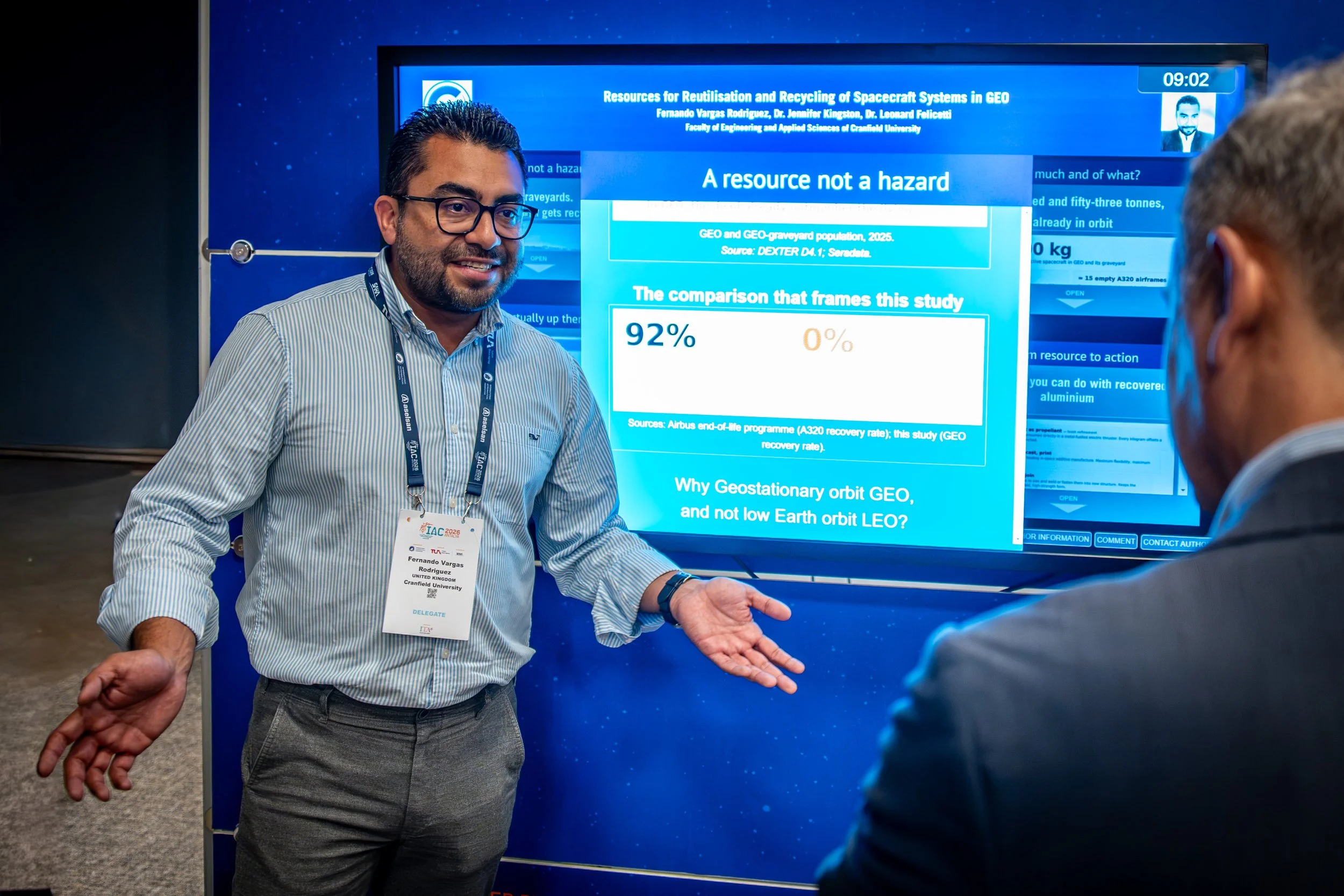
Fernando Vargas Rodriguez (Cranfield University) presenting his poster on recoverable materials in GEO.
Together, these studies help identify potential sources of material for future in-space recycling and guide the development of DEXTER's extraction and processing tools.
Special session on a metal-based circular space economy
On 6 October, DEXTER partners took part in the special session Towards a Metal-Based Circular Space Economy.
The session was organised by Adam Baker from DEXTER partner Magdrive, with Jennifer Kingston from Cranfield University among the speakers.
The discussion covered the potential reuse of metals from old spacecraft and rocket structures, including recycling, propulsion, debris removal and the technical and commercial challenges.
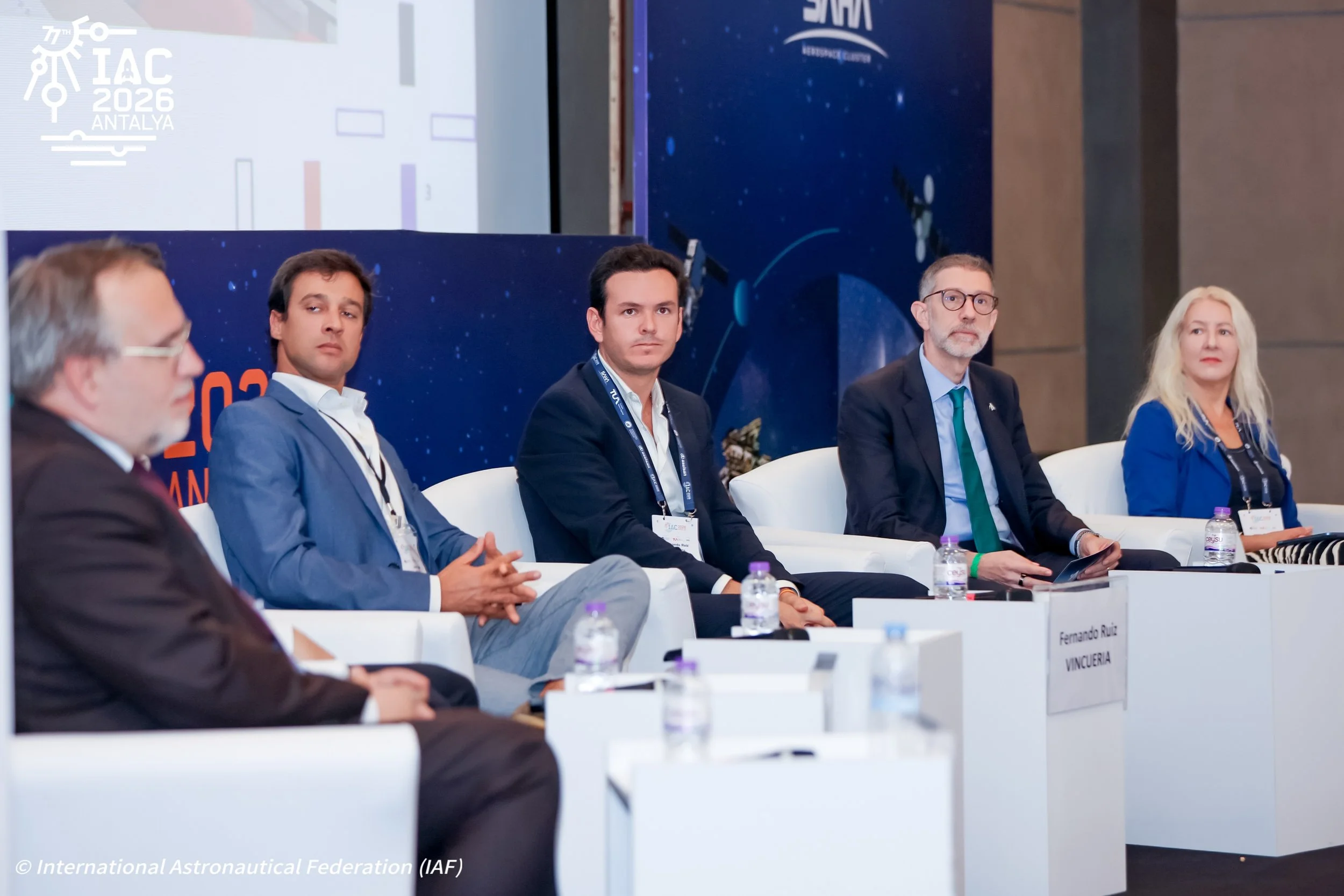
Jennifer Kingston (Cranfield University) with other panelists at the special session on a metal-based circular space economy.
Active debris removal and the wider European portfolio
DEXTER was also represented in the special session From Demonstrations to Operations: Active Debris Removal from an EU Portfolio Perspective on 8 October.
The session brought together European projects working on active debris removal to discuss the steps needed to move from demonstrations to operational services.
For DEXTER, future debris removal missions could also provide opportunities to recover and reuse materials already in orbit.
Following the initial studies, the next stages of DEXTER will focus on developing and testing the tools and processes for spacecraft disassembly, material extraction and reuse.
